Hey Guys, welcome back! Today is my birthday and this last week I have been over indulging in all the sweets. I like to call it a birth week, it makes me feel less guilty. While I am super upset with myself for eating awfully this last week, I plan to get back on track tomorrow. Any sort of celebration doesn’t feel like a celebration to me without delicious food so I definitely need to work on celebrating without over indulging. I did still make time for my workouts so this last week wasn’t a total bust. Earth day was last week, and this day is important to me and it should be important to everyone! I consider it a day to reflect on my current environmental decisions and I used it to think of ways I can modify my life to leave less of a footprint. While I was aiming at cleaning up some trash outside on earth day it ended up raining pretty hard, so instead I considered how AWFUL single use plastic is. Earth day reflecting lead me in to this weeks chapter, environmental health. This chapter is a very important topic and I really enjoyed reading it.
According to the chapter 2015 and 2016 were recorded as the hottest years ever in most regions of the world. Population growth has been more in the last 50 years than ever before recorded. Polar ice caps are melting and contributing to rising water levels. Natural resources are becoming increasingly scarce. There are several factors leading to the destruction of the environment which i will discuss.
Over Population: The worlds population has nearly tripled since 1950 and is projected to reach even higher numbers in the next few years. Some believe in the concept of zero population growth, which is the idea that each couple should have only one or two kids to stabilize population growth. As the population increases, the earths resources are spread more and more thin. Over population growth has had impacts on other species, the ecosystem, food supply, land degradation and energy consumption. More and more species go extinct every year as a result of the changing conditions of our earth. Our oceans have taken a huge burden, and are becoming increasingly more acidic. With more people, there is less food and availability of resources. Availability of drinking water is becoming less and less.
Air Pollution: The world we live in today has a large array of pollutants that contaminate the air, and the list keeps growing. Anthropogenic is a form of air pollution that refers to human caused. Power plants and vehicles are the largest contributors. The ozone layer forms a protective stratum in Earth’s stratosphere. Air pollution has literally been burning a hole in the ozone layer. The ozone layer protects us from UVb radiation from the sun which can cause skin cancer. We are all at risk with the depletion of the ozone layer.
Climate Change: Climate change refers to a dramatic shift in typical weather patters across the world. Global warming is a type of climate change in which the earths temperature becomes warmer. Most scientists today agree that the earth is warming, mostly being caused by burning fossil fuels. Here are some forms of evidence of global warming provided by the chapter:
- Global sea level rose 6.7 inches in the last 100 years
- 2016 was the warmest year globally
- Glaciers are receding
Water Pollution / shortage : Seventy-five percent of the Earth is covered with water, but only 1 to 2 percent of the world’s water is freshwater. Freshwater is the only water suitable for human consumption. Over half of global population is facing a shortage of clean water. Gasoline spills into water sources is the biggest source of water pollution. There are some things we can do to conserve water.
- turn off water when brushing your teeth
- take shorter showers
- detect and fix leaks
- install water efficient toilette/ shower heads.
- Don’t wash your clothes after every wear if they aren’t dirty.
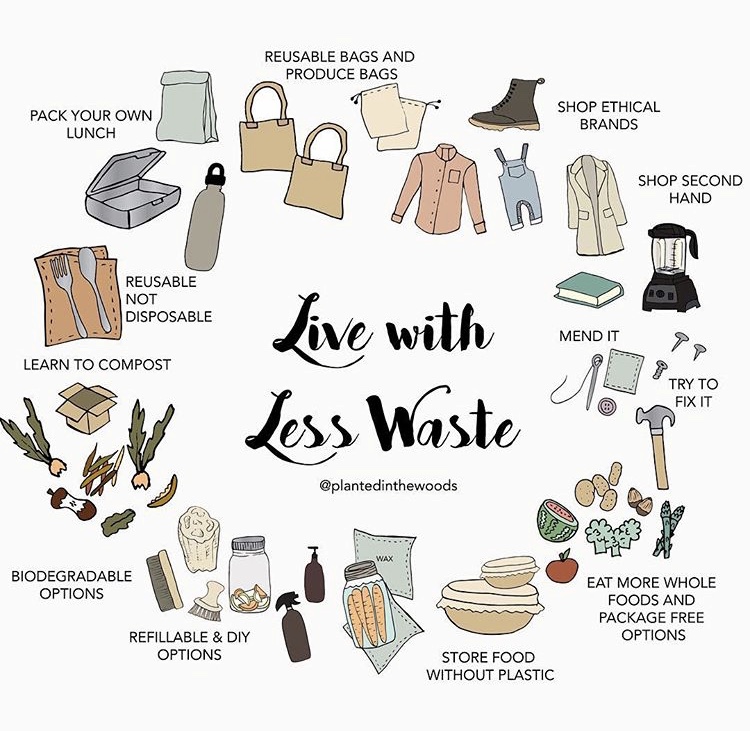
Pollution on land: Each day each person in the United States generates an average of 4.5 pounds of waste. Communities and individuals can all adopt strategies of reducing waste. Some ways include, waste prevention. For example why sell fruit in a plastic container when it grows in its own special packaging! Recycle, this is perhaps the most simple way to reduce but we still as a species are not recycling nearly as much as we can. Composting, this consists of letting organic waste dissolve with the help of microorganisms.
There is hope! Each human has an obligation to be environmentally mindful. Today’s environmental conditions are mainly due to the actions of humans. Our actions directly affect the planet. We live selfishly and conveniently but it is not sustainable. There are thousands of ways to do your part and to alter the future of the earth.
This chapter scared me! I consider myself an environmentally conscious person and still there is so much more I can do. I became a vegetarian when I learned the carbon footprint that the meat industry leaves. I am proud of my decision but still commit several offenses that harm the earth. When I have parties I almost always buy plastic plates, utensils and cups for the fear of doing dishes. This is NOT okay! Single use plastic is convenient but devastating to the earth. I always try to recycle but the office I work for does not. After reading this chapter I am motivated to reach out to management and find a solution for this. It is crazy to me that will all of this proof, some people still are so ignorant and don’t believe in global warming. It is real and it is going to destroy earth without intervention. It all starts at an individual level. My mom always said a lot of little people doing a lot of little things can make a big difference! This is true! Plant more trees, recycle and live more consciously.

 Tori'sHealthJourney